Keep an outdoor cold plunge from freezing
How to keep an outdoor cold plunge from freezing: keep the water moving, add a heater, insulate, and bring the chiller indoors. What makers and owners say.
Tubs owners leave outside
- Ice Barrel 500Over $1,500See it on Amazon
- Grizzly Coolers Grizzly 450 coolerOver $1,500See it on Amazon
The short answer
To keep an outdoor cold plunge from freezing, keep the water moving, put a small thermostat heater in it, and keep the lid on. Bring the chiller indoors before the first frost. If you stop for the winter, drain the tub and dry it.
Tubs owners leave outside
- Ice Barrel 500Over $1,500See it on Amazon
- Grizzly Coolers Grizzly 450 coolerOver $1,500See it on Amazon
How to keep an outdoor cold plunge from freezing
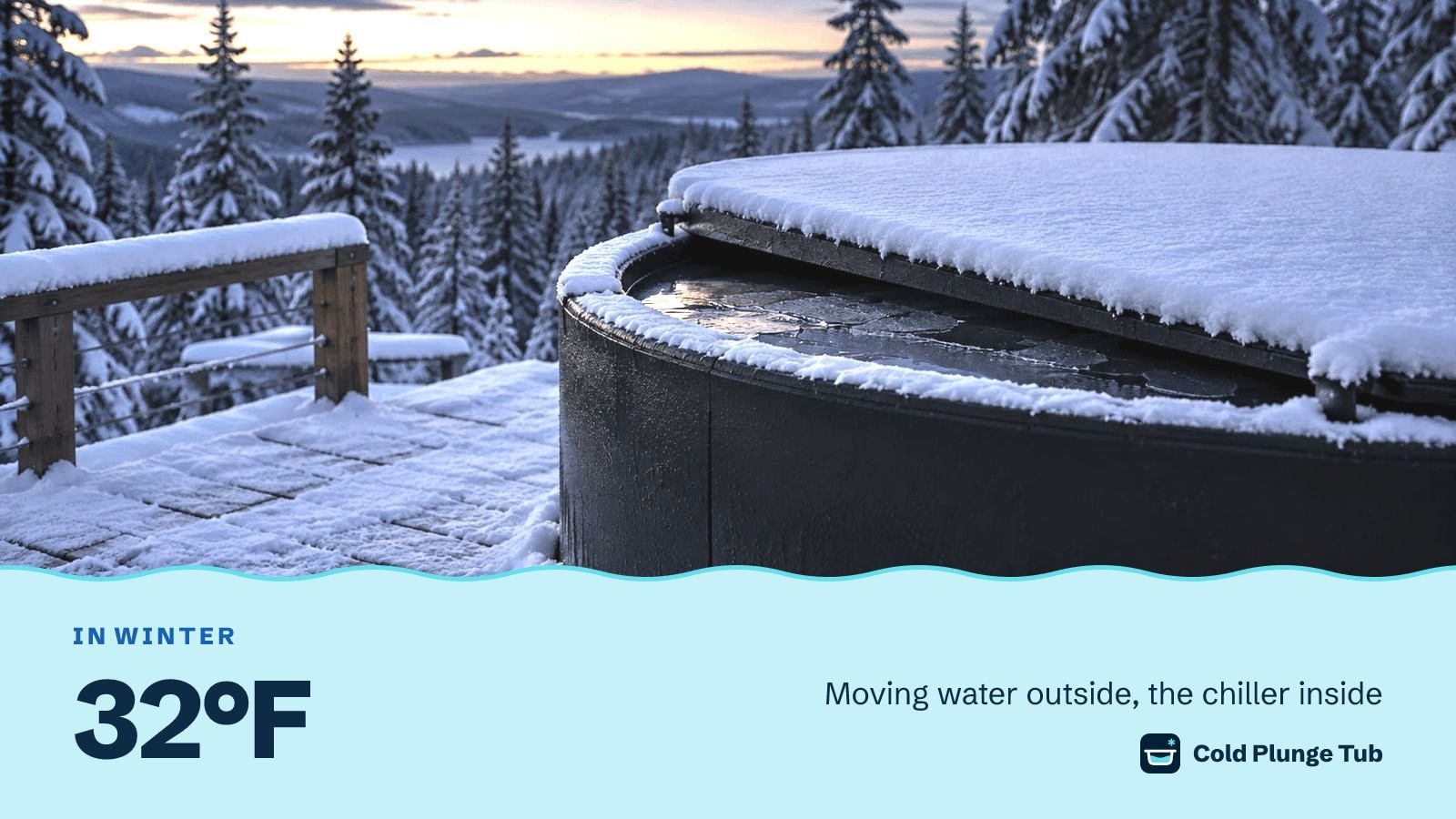
An outdoor cold plunge in winter needs no ice and no chiller, because the weather does the cooling. The work is the other way round: stopping the water from freezing solid, since ice expands and can split a tub or its fittings.
| What to do | Why | Who says so |
|---|---|---|
| Keep the water moving | Stirred or pumped water freezes later | Ice Barrel’s winter care page, and owners |
| Add a small thermostat heater | It switches on only when the water nears freezing | Two owners on r/coldplunge |
| Keep the lid on and the tub insulated | Less heat lost overnight | Owners |
| Break ice while it is thin | A thin sheet is easy. A thick one is not | Ice Barrel’s winter care page |
| Bring the chiller indoors | Chiller makers set a minimum air temperature | TURBRO and The Pod Company |
| Move it under cover in extreme cold | A garage or porch stays warmer | Ice Barrel’s winter care page |
We have not wintered a tub ourselves. This page is built from one maker’s winter care article, two chiller makers’ stated limits, and owner threads.
What tub makers say
Ice Barrel publishes a winter care page for its barrels. It says water “can turn to ice, which may cause expansion and potential damage”, and gives four ways to prevent that: stir the water regularly, use a submersible pump to keep it moving, break ice early, and move the barrel to a sheltered place such as a garage in extreme cold.
It also says who carries the risk. Winter care “is the customer’s responsibility”, and a failure in extreme freezing “is not covered under the product warranty”. The warranty itself excludes damage from “exposure to weather (including freezing)”. More on that is in our Ice Barrel 500 review.
Soft tubs are less forgiving. One seller’s listing for a fabric pod advises indoor use below freezing. Before you leave any soft tub full in a frost, read its maker’s guidance.
What to do with the chiller
Take it inside. The two chiller makers who state a limit both set it near freezing.
- 34°F TURBRO’s lowest air temperature for running the F85
- 32°F Where The Pod Company says to disconnect its chiller
Each maker’s own guidance, as given in our chiller roundup.
Owners say the same. One warns that a chiller left outside in freezing temperatures can be killed by it, and the advice is to bring it in before the nights reach the low 30s and let the weather cool the tub. Our picks, with each maker’s limits, are in the best cold plunge chillers.
What owners do
| Tub | Winter | What the owner reports |
|---|---|---|
| Grizzly 450 cooler | Left outside all winter | Water in the 30s, up to an inch of ice at times, “no issues” |
| Ice Barrel 500 | Nights at 20°F | No care needed. In a spell at 0°F, the owner swapped in some heated water every three days, about 30 minutes’ work |
| Bare 100 gallon stock tank | A three-season porch in Wisconsin | 38 to 42°F, including a spell below zero outside |
| Bare stock tank | Outdoors | Ice thick enough to need a hammer on the coldest days |
| Tub with an aquarium heater | Outdoors | The heater stops it freezing solid. No heating or cooling needed otherwise |
Two patterns show up in these reports. Insulated tubs with a lid got through with little attention. Bare tanks with still water are the ones that freeze over, and one commenter makes the same point: the people hacking ice off the top are mostly “running a Rubbermaid tank with no circulation”.
The heater owners describe is a fish tank or stock tank heater with a thermostat. One sets it to the temperature they want to plunge at, so it only runs when the water drops below that.
The water may be colder than is safe
A winter tub can sit in the 30s. Cleveland Clinic says to avoid water below 40°F, and its range for beginners is 50 to 59°F.
So the heater has a second use. Set to 40°F or a little above, it keeps the tub from freezing and keeps the water inside the limit a medical source gives. Check with a thermometer before every session, because a tub that was 45°F last week can be 34°F today. The range is explained in how cold an ice bath should be.
If you stop for the winter
Ice Barrel’s page gives the storage routine, and it fits any hard tub:
- Drain it completely. Open the drain, then tilt the tub to get the last water out.
- Dry the inside. Wipe it down and leave the lid off for a few hours.
- Store it under cover if you can. If it stays outside, put the cover on to keep out snow, ice and debris.
Drain the hoses, the pump and the filter housing too, for the same reason: water left in them can freeze.
Common questions
Will my cold plunge freeze in winter?
It can, if the water is still and the tub is uninsulated. Insulated tubs with a lid often get through with a skin of ice at most, by owner reports.
Can I leave my chiller outside in winter?
Not running. TURBRO says not to run the F85 below 34°F, and The Pod Company says to disconnect its chiller at 32°F or below.
Do I need a heater for an outdoor cold plunge?
Only where the water would freeze. Owners use a small aquarium or stock tank heater with a thermostat.
Is it safe to plunge in water near freezing?
Cleveland Clinic says to avoid water below 40°F. If your tub is colder than that, warm it before you get in.