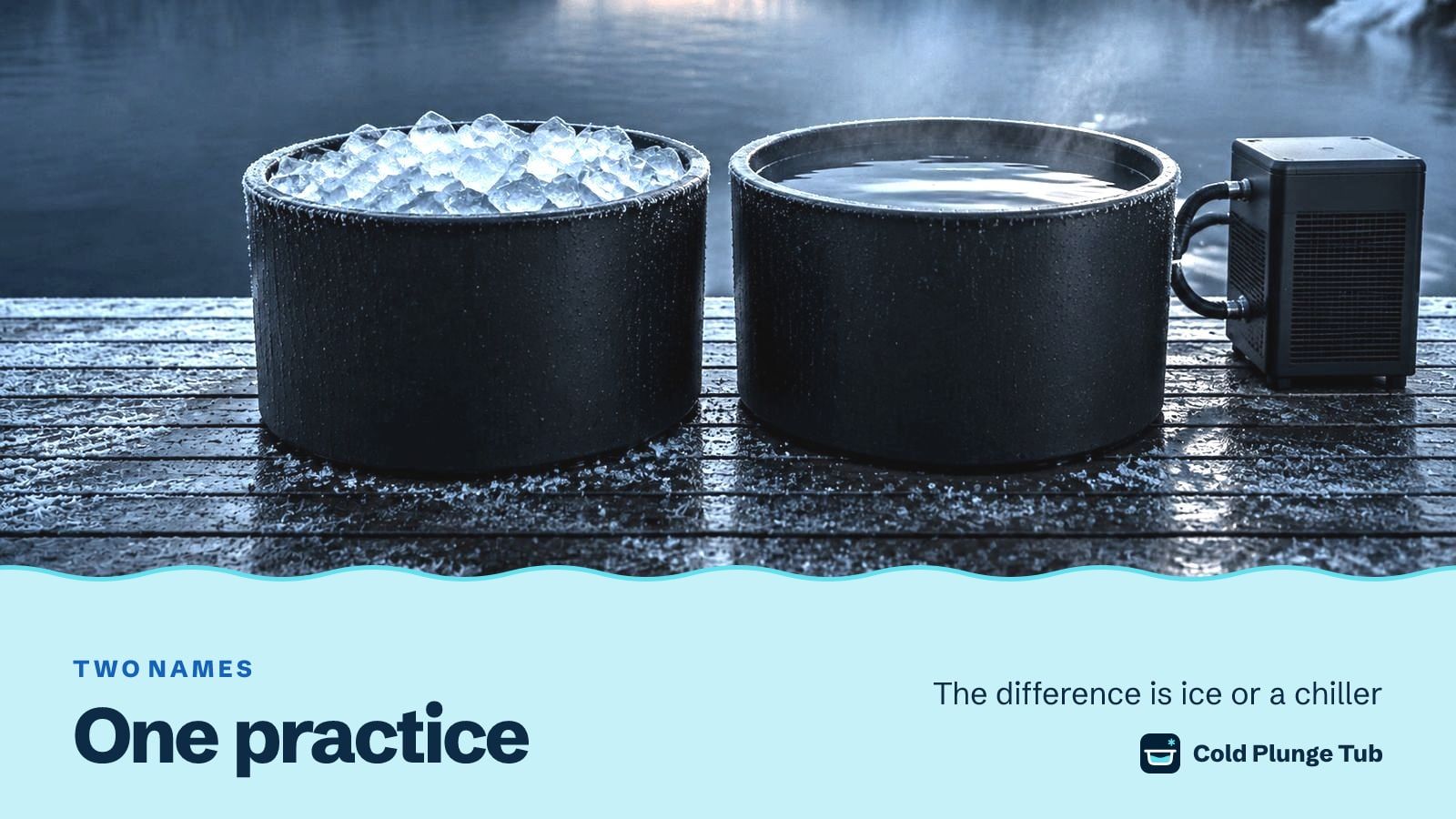
Cold plunge vs ice bath: same thing?
Cold plunge vs ice bath: both mean sitting in cold water, usually at 50 to 59°F. What differs is how the water gets cold, how steady it stays and what it costs.
Independent reviews of at-home cold plunge tubs, ice baths and chillers, from maker specs, owner reports and our own calculations. We don’t sell tubs.
Chosen from makers’ specs and what owners report after months of use.
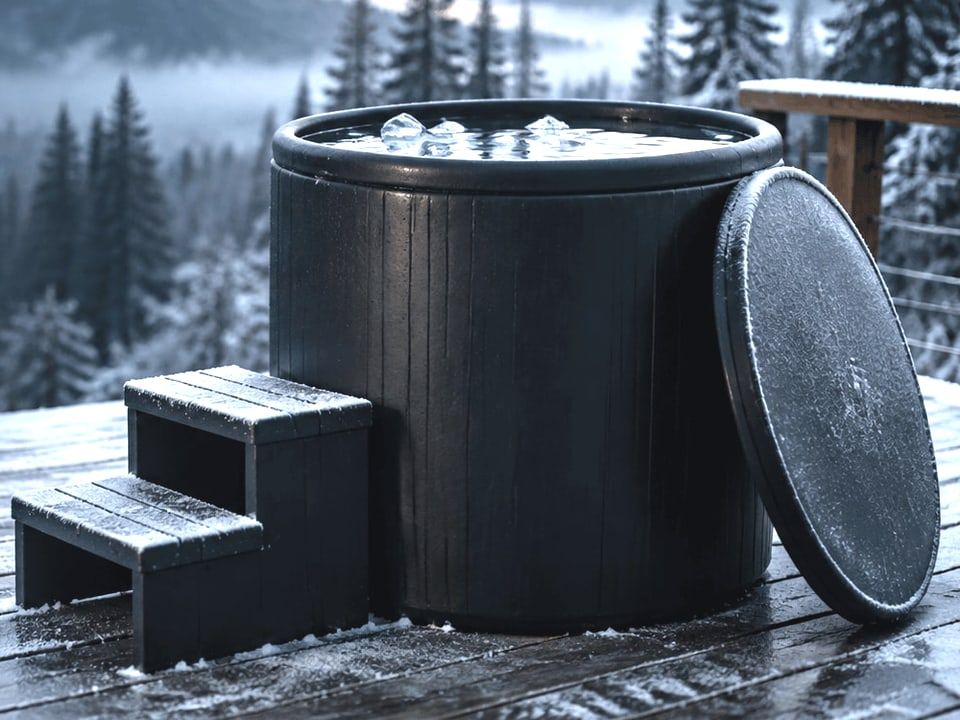
A rigid, insulated barrel that owners report holding cold for days.
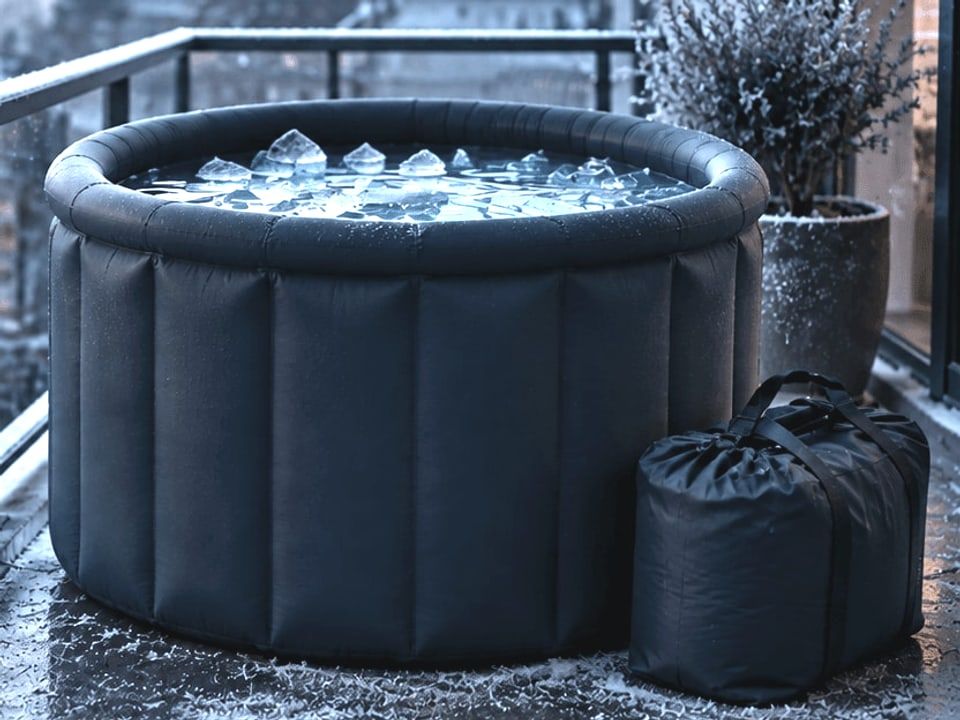
The cheapest tub with chiller valves and a two-year warranty.
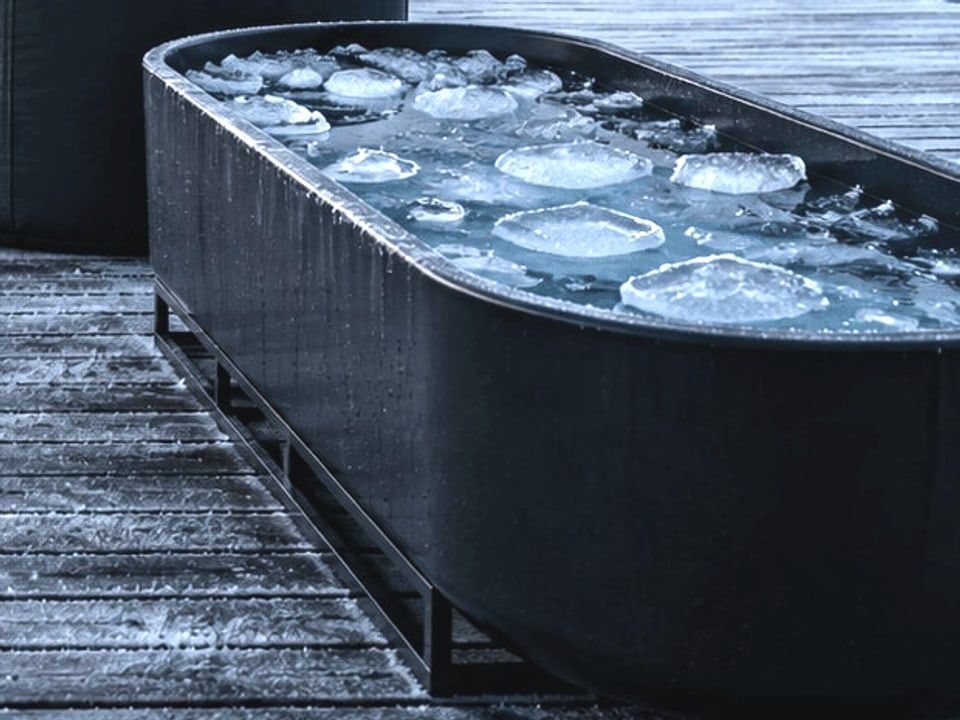
A lay-down tub you can stretch out in, best with a chiller.
The same insulation as the 500 in a smaller footprint.
A figure is marked as the maker’s spec, an owner report, the manual, or our own arithmetic. We do not test tubs ourselves, and we say so.
We read owner reports across shops, forums and video reviews, and list the problems that keep coming up, not the one-offs.
What the warranty excludes, what the outlet needs, what a filter costs to replace, and what the tub weighs when it is full.
Cold plunge vs ice bath: both mean sitting in cold water, usually at 50 to 59°F. What differs is how the water gets cold, how steady it stays and what it costs.
How cold should an ice bath be? Start at 50 to 59°F. What Cleveland Clinic, Mayo Clinic and a review of nine trials say, and what colder water costs in ice.

How much is a cold plunge? An ice tub starts under $100, a tub with a chiller near $730. What each setup costs to buy and run, with the first-year sums.
Yes. Both mean sitting in cold water, usually between 50 and 59°F. "Cold plunge" is the more common name in the US, and the tubs are the same.
No. We research and compare them. Some links to shops earn us a commission, which never decides what we recommend.
No. A tub and ice is enough to find out whether you will keep doing it. A chiller pays for itself within a year once you plunge about once a week.
Own one of these tubs and think we got it wrong? Corrections and questions are welcome.